
Introduction: Not only has AI become the new normal of being able to have virtual assistants in our lives, but it has now transformed modern warfare. The use of robots and artificial intelligence is opening up a new era of military action as we no longer need direct human ability to identify and destroy an intended target as this can now be carried using autonomous drones and AI surveillance systems to track enemy activity in real-time. With this development however there is a big question of morality that should be overriding the use of machines to decide on matters of life and death.
As military departments all over the world hurry to embrace and streamline the use of AI into their tactics, the degree of concern regarding responsibility, legality, and ethical rights and wrongs increases. This paper delves deep into ethics of autonomous weapons, the dangers they present, and the efforts (or lack thereof) by different countries to come up with an international regulation on them.
What Are Autonomous Weapons?
Lethal Autonomous Weapons Systems, or autonomous weapons, are military devices that can be directed to pick and attack its targets without human guidance. Examples include:
Battle drones with AIs that hone in on the target. Robotic sentry guns (such as South Korea SGR-A1) Self propelled land vehicles or submarines with war capacity.
Although a great deal of such systems still require human oversight (human-in-the-loop), full autonomy is not far behind.
Why Militaries Want AI in Combat
The benefits of applying AI to military operations are self-evident to military planners:
Fast and Accurate: AI is capable of handling data and calculation within a fraction of a second. 24/7 Operations: The machines do not get tired, hesitate or panic. Fewer Human Lives: Self-driving systems will be able to enter high-risk areas thus less loss of human lives. Strategic Advantage: Superior nations in AIs will have a strategic advantage.
That is why AI in the military is the focus of many international powers, including the U.S., China, Russia, Israel, and South Korea.
The Ethical Dilemma: Should a Machine Be Allowed to Kill?
Here’s where things get murky. The fundamental ethical question is:
Can a machine truly make a moral decision about taking a human life?
1. Accountability Gap
In the case of an autonomous weapon killing civilians in an accidental manner who takes the blame?
The programmer? The commander of the military? Even the machine?
There is no obvious legislation to respond to this.
2. Loss of Human Judgment
The AI is not a moral agent and it cannot reason morally and in the context of situations or be emphatic. When human beings delegate the use of lethal force to moving machines, the element of conscience is eliminated in battlefield.
3. Unintended Escalation
AI systems might fail to understand the actions of the enemy, resulting in either unwanted conflicts or any kind of escalations. Where a person would not consider something as a threat, a machine would recognize something that is a threat.
4. Dehumanization of Warfare
The convenience of warfare through AI can contribute to a decrease in the entry into a conflict-making warfare more acceptable and more common. When the killing is done by machines, does it make it easier on nations to accept the cost of war?
The Legal Perspective: Where Are the Regulations?
The rules of warfare that exist on the international level, such as those in the Geneva Conventions, were drafted prior to the introduction of AI into battle. The present-day situation is as follows:
1. There is no international agreement outlawing autonomous weapons. 2. The Convention on Certain Conventional Weapons (CCW) has been debating the topic but it has yet to make any progress because of the stalemate between powerful states. 3. At the same time, advocacy groups such as Campaign to Stop Killer Robots are lobbying to invoke a preemptive ban, similar to the international treaties banning chemical and biological weapons.
Real-World Examples: Are We Already Using Killer Robots?
While fully autonomous lethal systems aren’t widespread yet, we’re not far off:
- Israel’s Harpy drones can autonomously detect and destroy radar emitters.
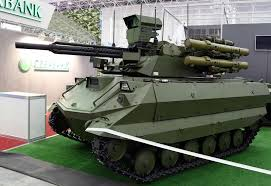
- Russia’s Uran-9 is a ground combat robot that operates semi-autonomously.
- The U.S. military is actively testing AI integration into F-16 fighter jets and drone swarms.
Many experts warn that without regulation, we’re sleepwalking into a world where AI decides who lives or dies—with minimal oversight.
What AI Experts and Ethicists Say
AI experts, including Elon Musk, Stuart Russell, and deceased Stephen Hawking have cautioned on AI weaponization.
Stuart Russell, one of the best known AI researchers, said:
The ability of machines to decide that human beings have to lose their lives will be catastrophic to human security in the globe.
Indeed, more than 30, 000 AI scientists and technology experts have signed public letters demanding that the world bans lethal autonomous weapons.
Is There a Middle Ground?
There is an argument that not everything about the use of AI in war is immoral. The following can be achieved using AI:
Better logistics and medical evacuation. Improve monitoring and alertness of threats. Minimize the damage to the collateral using improved targeting systems.
The trick they argue is ensuring humans are always kept in the loop particularly when it comes to lethal decisions.
The Road Ahead: What Needs to Happen
To prevent misuse and ensure AI in warfare is aligned with human values, several steps are crucial:
1. International Regulation: Countries need to find a common ground when it comes to the establishment of definite boundaries of autonomous weapons and standards of accountability.
2. Transparency: Governments must be transparent on the usage of military AI so that it can be scrutinized by the people and globally.
3. Ethical AI Design: Designers of AI products need to incorporate ethical principles and safety mechanisms into the products.
4. Raising Awareness: Raising awareness among people about the threat of killer robots can also mobilise government to take responsible action.
Conclusion: The Choice Is Still Ours
AI in warfare presents both promise and peril. While it can enhance efficiency and reduce human casualties, it also risks outsourcing life-and-death decisions to machines that lack moral reasoning. As a global society, we must decide:
Do we want a future where war is automated and accountability is blurred, or one where human ethics guide every trigger pulled—AI-assisted or not?
The decisions made in the next few years will shape not only the future of warfare but the future of humanity itself.
For more interesting information, visit to our site.