
Introduction: Abilities of AI in the field of soft development have been focused on code generation for years: we have been amazed by the ability of tools such as GitHub Copilot to auto-complete the functions and translate the comments into code. Nevertheless, there is mounting evidence of a seismic shift: AI is leaving the digital realm behind and commanding real-world, physical systems. This combination of artificial intelligence and mechanical movement- physical AI- presents the next step in evolution of artificial intelligence.
The Evolution: From Digital Assistants to Physical Agents
Phase 1: The Code Generation Era (2020–2024)
Simple AI coding programs automated syntax not content. They speeded up the process of writing the boilerplate code without much coping with system-level design. As one Medium analysis pointed out, these tools were productivity boosters, and not architects.
Phase 2: Agentic AI Emerges (2025)
By 2025, AI installments had developed to free coding agents. The following systems may do the following:
Refactor multiple different files codebases. Produce test suites. Identify sources of performance bottlenecks. Contrasting prior generations, however, they completed tasks on their own initiative-turning Slack commands into actual code modifications .
Phase 3: The Physical AI Revolution (2025–Present)
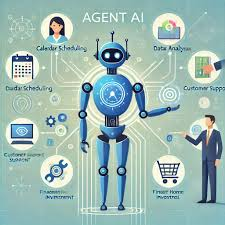
Artificial intelligence combined generative intelligence with a physical body today. These systems sense environments with sensors, analyse data in real-time and then respond through actuators this loop is closed between digital knowledge and real world movement.
| Phase | Capabilities | Limitations |
|---|---|---|
| Code Generation | Syntax completion, snippet generation | Limited context awareness |
| Agentic AI | Task automation, cross-file refactoring | Confined to digital outputs |
| Physical AI | Real-world sensing, adaptive action | Hardware integration complexity |
Core Technologies Powering the Shift
1. Context-Aware AI
Physical systems require knowledge that is beyond code. The new AI examines:
Environmental information (temperature, spacial arrangements). Operation limitation (electrical and safety limits). Anomalies real-time (sensor discrepancy).
This makes systems such as Pelico factory AI able to anticipate the bottlenecks present in supply chains by comparing the warehouse sensors with the logistics software.
2. Embodied Learning
Whereas ChatGPT has only read about a bouncing ball (it never held one in its hands), Physical AI learns physics by:
Simulations: Artificial twin of warehouses/factories are used to teach AI without risks. Reinforcement Learning: AIs get rewarded whenever they perform well (examples, a robot learning to improve the clutch tightness).
NVIDIA Omniverse is one such example, which emulates 3D spaces in which AI trains prior to being deployed.

3. Edge Computing
Physical AI needs the ability to make split-decisions. Models are run locally on robots using embedded processors (such as NVIDIA Jetson), which circumvents cloud latency. This enables:
Surgical robots in real time object recognition. Automated vehicle collision avoidance in real time.
Transformative Applications
Smart Manufacturing & Logistics
Inventory data and LiDAR enable Pelico factory AI to recognize stock-outs of parts, saving 40 percent of delays. The freight platform on Raft automates customs reporting, shipment tracking and makes 15+ manual handling operations redundant.
Precision Healthcare
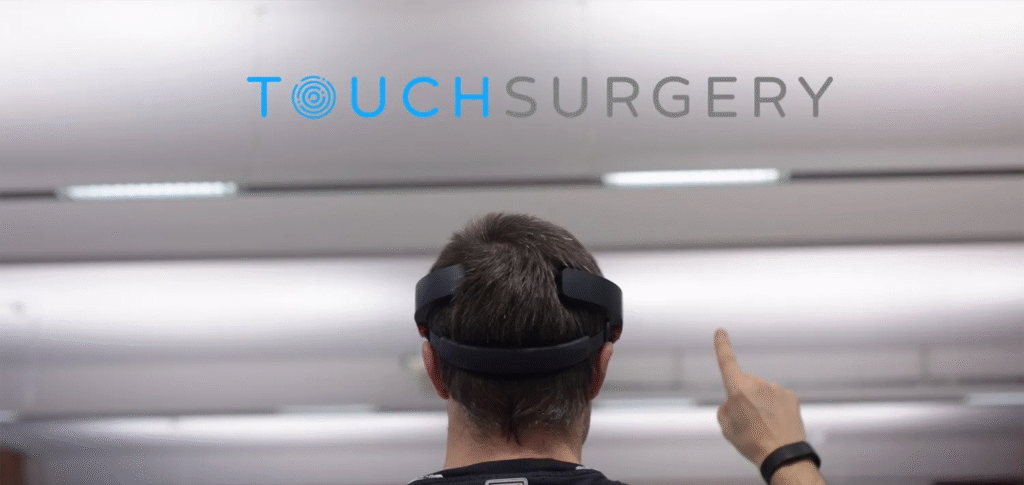
Medtronic has developed an AI called Touch surgery that searches through video in real time guiding the surgeon to reach accuracy levels of microns. Recovery in post-op bots supervise the critical conditions and modify the rehabilitation sessions, making recovery last 20- 40 percent shorter.
Autonomous Agriculture
The combination of soil sensors, weather forecast and crop databases in AI tractors enables:
Exploit planting depth. Perform real-time irrigation adjustment. Forecast pests outbreaks.
Outcome: 30 percent reduction of water losses, 15 percent increased yields.
Self-Repairing Infrastructure
AI vision- equipped micro-bots check pipelines or bridges finding some cracks. They then:
On-site repair material in 3D printing. Independently repair structural defects under seal. This cuts down the maintenance expenses and eliminates disasters.
Challenges on the Frontier
Technical Hurdles
Sensor Limitations: Sensor Limitations: Dust, weather or interference can produce a skewed data. Retrofitting legacy Systems: It is costly to adapt the AI in old manufacturing plants because of their outdated hardware. Energy Requirements: Unprecedented battery consumption is caused by continuous sensor processing.
Ethical & Regulatory Risks
Responsibility: So who is at fault when an AI used in surgery screws up? Bias in Action: Training one weather horizon could lead to a bad preference in another. Security: Robotized construction robots are hackable, and can lead to physical injuries.
New regulatory frameworks such as the EU AI Act have placed physical systems of AI under the bracket of high-risk systems in need of stringent audits
Economic Impact
At the same time that Physical AI is establishing occupations such as AI Safety Officers, it disintegrates manual work. Reskilling programs are important- particularly in economies with a lot of manufacturing industries.
The Future: Where Do We Go Next?
- Quantum-Enhanced AI: Solving complex spatial problems (e.g., city traffic flow) in seconds.
- Human-AI Hybrid Teams: Construction workers using AR glasses to see AI-suggested safety adjustments.
- Self-Evolving Systems: AIs that redesign their own hardware for efficiency.
- Agent Collectives: Swarms of micro-bots collaborating like ants to build structures.
| Domain | 2025–2026 | 2027+ |
|---|---|---|
| Healthcare | Real-time surgical guidance | Autonomous nanobots for drug delivery |
| Agriculture | Predictive yield optimization | Closed-loop eco-farming ecosystems |
| Manufacturing | Defect detection | Self-reconfiguring production lines |
Embracing the Physical-Digital Fusion
Physical AI is not an attempt to replace humans, it is only an expansion of our ability. With the AI creeping off the screen to transform disciplines, factories, and habitats, new mandates ensue on the parts of people who make and sell these products:
Study hardware interfaces: APIs hardware/sensors/actuators are important as Python. Become more ethical: Move fast and break things does not work when it comes to systems that operate cranes or pacemakers. Love interdisciplinary design: engage roboticist, physicists and ethicists.
The breakthrough in coding that comes next is not going to be a more competent Copilot, it is going to be an AI which constructs what it envisages. When Physical AI comes of age it will not only write code, it will also pour concrete, plant trees, and cure hearts. And here is the frontier.
For more interesting information, visit to our site.