Introduction: Cut to the chase Let’s state the facts And developers know what it is. This is partly because of awe and partly because of anxiety, the first time GitHub Copilot autocompleted an entire function you were considering. The blindingly rapid pace with which ChatGPT AI solved a pesky problem that you were unable to crack in hours.
Another question that probably every programmer had in the back of their mind was: Is AI going to take my job?
That is the wrong question.
The correct question is: “What exactly is AI doing to my job and how can I adjust in order to not only survive, but thrive?”
The reality is that, the job market of the software developers is not being removed; it is being enhanced. The purpose of development is not ending the standards likely to exist under I but to colour this tool, which is I, with the most powerful tool of all that can be added to the toolbox. This article drills below the smoke and mirrors to consider the actual, practical changes occurring today and offers a practical guide to the path forward in this new climate.
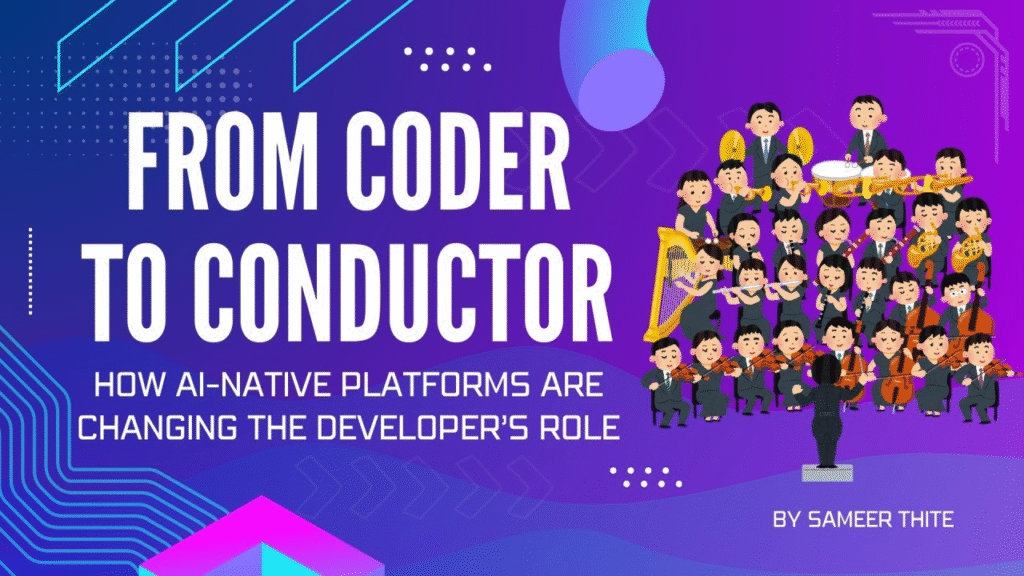
From Coder to Conductor: The Changing Role of the Developer
The essence of the shift is that of abandoning low-level syntax and boilerplate and embracing high-level architecture, strategy and problem solving. The analogy is shifting bricks to be the architect.
- The Death of Drudgery: AI is best at doing those parts of the job that are boring. Code generation, unit testing, debugging typical faults and documentation are being aided–or even done–by artificial intelligence. This saves so many hours to more important work.
- The Rise of the “AI Conductor”: The role of the developer would be to conduct on the AI tools. This includes the creation of specific prompts, the careful evaluation of AI-generated code, the incorporation of recommendations into a larger source code, and architectural consistency. Speed in typing no longer counts, it is judgment which counts.
The In-Demand Skills of the AI-Augmented Developer
The problem is as routine coding is automated, another set of skills is becoming exponentially valuable. These competencies are already necessitated by the seeking of hiring managers and recruiters.
- Prompt Engineering for Developers: The new most important skill is develop a prompt engineering. It is not about writing essays to ChatGPT, it is about learning how to come up with instructions telling something very specific to be done with a certain amount of context behind it: “Write a Python fuction using Pandas to clean this dataset. Treatment of NULLs, standardization of date format, and a report compilation of statistics.” Is prompt better? The prompt voters got the best.
- Systems Architecture & Design: The what and why of application design must be mastered by developers as the how is taken care of by AI. The skill of designing scalable, secure and efficient systems is becoming the key point in distinguishing between junior and senior work visions.
- Problem Decomposition: AI can address small specific problems easily. It is your responsibility to reduce the overly large, complex business problems into a set of small, more definite questions which AI can interpret and support to solve. This is a top-tier level mental work which AIs cannot imitate.
- Code Review & Quality Assurance: AI may create code and it might not necessarily oversee its quality, security, and elegant yet. Human control is even more important than before To be able to audit, optimize, and secure AI generated code is a superpower.
- Soft Skills & Domain Expertise: Or to be frank, it is all about grasping the business problem. Developers with the capacity to liaise with non-technical members of stakeholders, interpret the needs of users and translate them into specific technical requirements of AI tools will be invaluable. Your domain expertise (e.g. in finance, healthcare, logistics) is what AI cannot bring to the table.
New Opportunities on the Horizon
It is not all about creating new markets, it is also creating entirely new jobs. Programmer employment opportunites are moving into thrilling new frontiers:
- AI Integration Specialist: A developer that specializes in integrating different AI tools (e.g., Copilot to code, ChatGPT to document, AI testing tools) in a seamless manner with existing company development process.
- LLM (Large Language Model) Engineer: An expertized job narrowly focused on the fine tuning and deployment of base AI models to fit the unique needs of a given organization, much more than merely using standardized tools.
- AI-Assisted Product Manager: PMs that and utilize AI to parse market data, create user stories, and forecast development timelines, necessitating a different grade of technical synergy between PMs and their engineering teams.
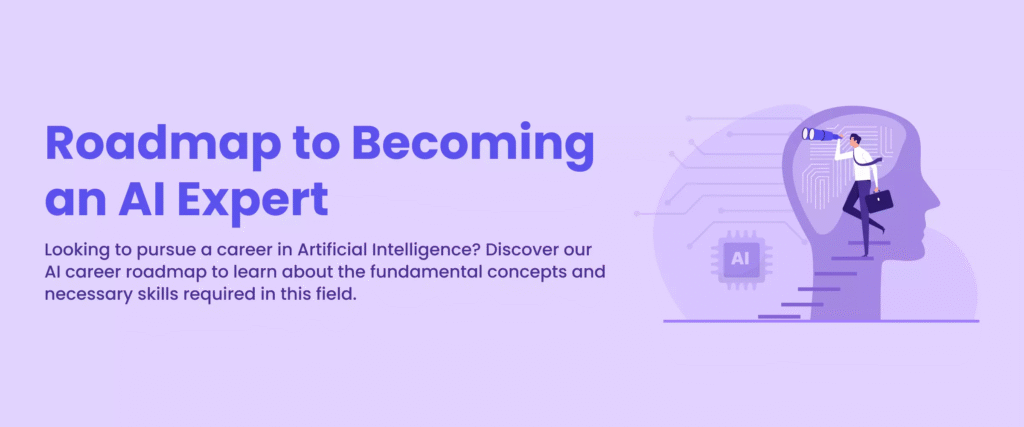
The Practical Roadmap: Future-Proofing Your Development Career
Feeling overwhelmed? Don’t be. Here is what you can do to get on top of it.
- Embrace the Apprentice Mindset: You are no longer an expert at everything. Be ready to learn with the artificial intelligence. Use it as a tutor to explain to you new languages, frameworks or concepts that you do not understand.
- Integrate One Tool at a Time: You do not have to use all of them simultaneously. Begin with implementing GitHub Copilot or CodeWhisperer into your IDE Use it everyday Find out your peculiarities Maybe, then add a debugger or database query pack.
- Practice Critical Thinking, Not Just Coding: Think, Do Not Just Code: AI summary do not simply accept an AI suggestion. Ask: Is this secure? Is it economical? Does it conform to overlooked style manual in our unit? Does it have a more elegant, better solution?
- Invest in Deep Work: Do more of the task that requires complex and creative problem solving and wins real business value. And here where you make your mark.
- Build a “T-Shaped” Skill Profile: You need to develop a general knowledge portfolio with a specialized and deep expertise on an individual area of interest (The leg of the T). Not everything will be an expert to I can.
Conclusion: The Future is Collaborative
This debate (AI is superior vs the programmer) is a fallacy. The next generation is not concerning rivalry; it is concerning cooperation.
The most effective, efficient teams of the future will be human-robot duos. The developers that succeed will be those that view AI not as the enemy, but the most intelligent intern they have ever had who never goes to sleep, has always read every programming book and still needs a well trained professional adult to show it the ropes and apply experience.
The landscape of the software developer job market is evolving, however, the essence is intact and bigger than ever. It is making a shift toward an emphasis on problem solving instead of writing code. Which is, after all, what we enlisted.
OK, now it is your turn How have you gone your AI coding assistants? Are they a value added pair programmer or an indubitable anguish? You can tell us your ideas in the comments section!
For more interesting information, visit to our site.