Introduction: Over the last few years, Artificial Intelligence (AI) has taken on the form of a revolutionary trend in almost all fields of science. Ranging in capability all the way from changing the ways in which we create medications to unraveling the secrets of the universe, AI is no fad concept–it is a device that is simply making humanity learn more and at a faster rate. Throughout the article we will look at how AI helps in drug development to astrophysics and how it is fast proving to be invaluable in research and education.
What is AI in Scientific Research?
It is necessary to know what we mean by AI in research before discussing particular areas. All of these apply to Artificial Intelligence in the sense of machine learning (ML), deep learning, natural language processing (NLP), and various other processing algorithms that enable machines to recognize patterns, make decisions, and extract insights out of large amounts of data.
Scientists apply AI in performing the following functions:
Interpret big data sets Predict outcomes. Find trends which humans would not detect. Robotize repetitive work. Model complicated processes.
It is time to examine in more detail the specifics of the application of these in two revolutionary fields: drug development and astrophysics.
AI in Drug Development: Accelerating the Path to Cures
The process of creating a new drug usually takes such a long time (10-15 years) and is rather expensive (billions are spent). Yet, AI is rapidly reducing this timeline to make all stages of the process much more efficient, including discovery and clinical trials.
1. Drug Discovery and Molecular Design
The large chemical databases that AI can sift through to find promising drug candidates are huge. AI systems with the help of deep learning models can:
Make predictions of the interaction of various molecules with respective proteins. Propose new molecular structures that have good chances to become effective against a disease. Rediscover old drugs to use in new ways.
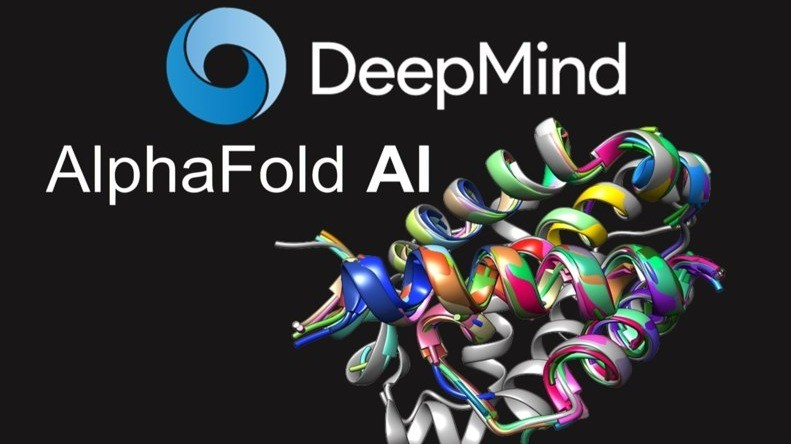
Take, as an example, DeepMind AlphaFold that has gained headlines by modeling the 3D structures of proteins with a near-lab precision ability that previously had to waste months or years to accomplish. The innovation is assisting researchers in understanding diseases in a better way and setting more precise treatment.
2. Preclinical Testing and Toxicity Prediction
The AI models will be able to predict the action of a drug in human organs simulating the side effects, toxicity, and metabolism of a drug. This preliminary risk analysis is effective as it proves useful in time-saving and animal testing dependence.
3. AI in Clinical Trials
Identifying and tracking the right patients is complicated and time demanding. AI can be of assistance by:
Scrutinizing electronic health records ( EHRs ) to determine appropriate subject matter. Prediction of outcomes by patients and possible dropouts. Ensuring the design of trials is optimal to improve the success rates.
4. Real-World Example
AI has helped accelerate vaccine development during the COVID-19 disease. As the example, Moderna employed AI to study genetic codes of the virus and develop mRNA vaccine in the shortest time possible.
AI in Astrophysics: Unraveling the Mysteries of the Universe
Whereas AI is saving lives in the medical world, it is also making us learn more about the universe. In astrophysics, scientists have to handle astronomical data–literally. Artificial intelligence is needed to gather this information and comprehend its interpretation of the other planet.
1. Classifying Celestial Objects
Telescopes are helpful tools because they take millions of pictures of stars, galaxies, black holes, and others which are exploited by astronomers. These objects cannot be classified manually but since there are AI.
Classify type and size of galaxies as well. Detection of abnormalities ( novae or planets ). Find unusual or rare items with a blink of an eye.
Astronomical images are being classified automatically using tools such as Google TensorFlow to automate the process of classifying the sky surveys (such as the Sloan Digital Sky Survey (SDSS)).

2. Gravitational Wave Detection
Gravitational waves are wavings in the spacetime with disturbances due to catastrophic activities such as black hole mergers. They can only be detected through huge amounts of data gathered by such detectors as LIGO. AI is used to get rid of noise and identify real signals more effectively and more quickly than traditional approaches.
3. Simulating the Universe
Now simulation is being modeled using AI:
Galaxy formation. Distribution of dark matter. Billions of years of evolution of the universe.
These simulations assist the astrophysicists in hypothesis testing and the same can be compared to observational information.
4. Planet Hunting
Exoplanet detection ExoplanetsPlanets not part of our own solar system are also detected using the AI algorithm, based on the analysis of the minute brightness dimmings as a planet crosses in front of a star. Kepler missions and AI that are operated by NASA help identify these transitions, and, thus, verify new worlds.
How AI is Changing Research Education
The effects of AI extend beyond the lab–it is transforming the way that researchers of tomorrow are being educated.
1. Enhanced Learning Tools
AI-based systems such as ChatGPT, Khan Academy at AI tutor, or the Socratic app created by Google are rendering the study of complicated subjects such as biology, chemistry, physics, or even math, accessible to almost any student everywhere.

These tools are able to:
Explain the hard stuff. Immediately respond to follow up questions. Make learning paths customizable Use point-of-need learning.
2. Data-Driven Research Training
AI is being implemented in curriculums of universities and research institutions. It is now learnt by students:
The Python and machine learning libraries usage. Cleaning and analysis of big data sets. Making ethical and responsible interpretations of AI-derived outcomes.
This is even resulting in a new breed of science graduates that can use technology to actively work with in researching.
Challenges and Ethical Considerations
While AI is a powerful tool, it’s not without limitations.
Bias in AI models can lead to misleading conclusions in both medicine and astronomy. Lack of transparency (the “black box” problem) makes it hard to understand how some AI models arrive at their predictions. Data privacy, especially in healthcare, is a critical issue. Over-reliance on automation may reduce critical thinking in some areas.
To use AI responsibly, researchers must understand its strengths and weaknesses—and always validate AI-generated results with human expertise.
The Future of AI in Science
The interaction of the AI and scientific research is at the initial stage yet the future is rather optimistic. There is to be expected:
Accelerated advancements in fields that include genomics, climate prediction, materials innovation and so on. International cooperation, AI being the leveler of disciplines and continents. More SciFi like access to science, as AI tools are being made freely available to scientific researchers and students around the world.
Final Thoughts
Whether it is combating lethal diseases or peeking over the borders of the universe, AI is turning on into a reliable ally in our pursuit of wisdom. Its not supplanting scientists-it is enabling them to think greater, act quicker and delve deeper. To students, to educators, and researchers just cannot afford not to know how AI is being used in areas such as drug developing and astrophysics.
Be it the microscopic study of the world of molecules or even the exploration of space itself, this one thing you must never forget. The future of discovery is inexhaustible with the help of AI.
For more interesting information, visit to our site.