Introduction: The Fear vs the Future
With AI technologies evolving faster than ever, one burning question is echoing across industries, households, and headlines: Will AI replace us or empower us?
Automation is already changing our workplace experience- customer service chatbots, design by AI, medical diagnostics. Others consider that it is a productivity miracle. Some are, however, concerned with being replaced with robots and algorithms. The truth is not black and white- it is not that yes or no.
This article will unravel the automation debate, see the most susceptible sectors, how AI can become a menace or an opportunity, and what the future of work can really become.
The Rise of AI Automation: What’s Really Happening?
Automation with AI is not a work of fiction, but it is already applied to everyday tools and processes:
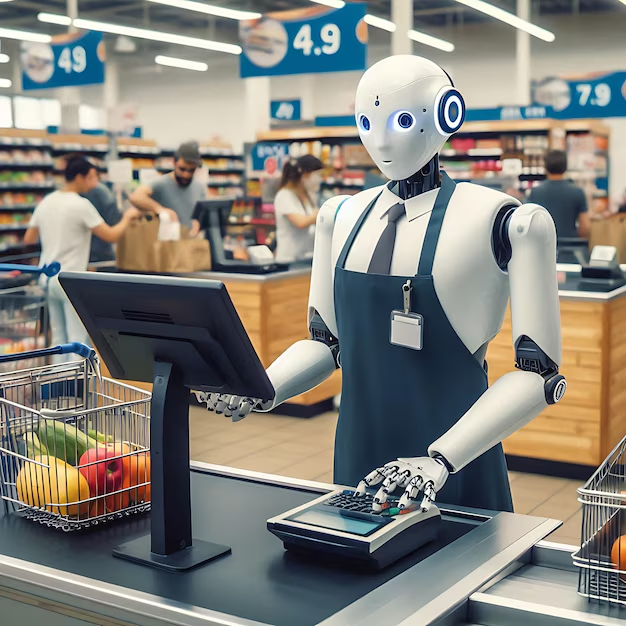
Retail & Logistics: Autonomous inventory management, cashier-less purchases, and autonomous distribution. Healthcare: AI-based diagnostic tools, robot assistance surgery, virtual health assistant. Marketing & Content Creation: Accepting that they will now do the job they always should have done: Generative AI generating ad copy, graphics and even video material. Finance: Investing including robo-advisors, algorithmic trading, and fraud detection.
Not only are these technologies making the work more efficient, but they also have the ability to transform long-established job concepts.
Who’s Most at Risk of Being Replaced?
Based on McKinsey and the World Economic Forum research, as many as 30 percent of the job tasks today can be automated by 2030. However, not every role can be put in the same situation of vulnerability.
High Risk Jobs:
Data entry operators Telemarketers Low level customer service reps Cashiers and retail sales persons Production assembly-line workers
The latter jobs tend to be repetitive and predictable work, which can be accomplished more cheaply and quickly by means of AI.
Low-Risk or Artificial-Intelligence Jobs:
Healthcare professionals Imaginative or creative jobs (designer, author, video editor) Educators and teachers Software developers Strategic planners and leadership
These are jobs that need empathy or creativity together with problem-solving or human judgment, which is an area that AI is still lagging behind.
Empowerment, Not Just Replacement: The Augmentation Argument
Though the fear of losing a job is quite appreciable, there is more to it. Most analysts believe that the problem of AI replacing humans cannot be discussed because people are not going to be abandoned, but tasks will be abandoned. And that provides possibilities.
AI as Co- Pilot
Consider AI as an assistant getting the dirty and time-consuming jobs out of your hands, giving you more time to do something more important.
Physicians will use less time to interpret scans and they will have enough time to deal with patients. AI allows writers to brainstorm and correct texts but the voice and story are human. Marketers are able to script A/B and performance monitoring and focus their time on strategy formulation.
This partnership between man and the AI is frequently referred to as augmented intelligence as opposed to artificial intelligence. It is not a matter of substituting human beings- but augmenting them.
Real-World Case Study: How Companies Are Using AI Ethically
Case: IBM’s AI-Augmented HR System
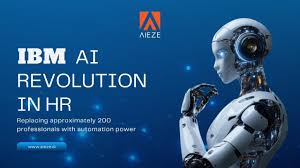
IBM unveiled an artificial intelligence tool that enables HR to find internal candidates to promote and develop, through analysis of skills, performance and potential. Instead of reducing HR jobs, it enabled people in this HR sector to make smarter decisions in a shorter period of time-leading to increased displacement within the company and employee happiness.
This case illuminates the fact that automation, where it is implemented in an ethical and transparent mode, can enhance the efforts of human decision-making rather than substitute it.
Ethical Questions: Where Do We Draw the Line?
Naturally, automation brings with its own serious ethical and social considerations:
What happens to employees whose duties are outsourced? How can we re-skill them? AI discrimination: In case there is bias in the training data, then the AI might discriminate or make such unjust decisions. Transparency: Do we need to inform users, whether they are communicating with an AI system or a human? Surveillance: It is also possible that employees are under surveillance through AI- what will happen to the privacy of employees and the trust between them and employers?
Automation in the future should not be about control of people but about people and their governance structures must be those that save people, deliver transparency and equity.
Preparing for the Future: What Can You Do?
The future of work will touch you no matter whether you are a student, employee, entrepreneur, or policymaker. Good news is you do not have to be helpless.
For Individuals:
Be up-to-date: Study the AI-related tools and their connection to your sphere. Emphasis on soft-skills: Empathy, leadership, communication, and creativity are still in demand. Learn to be flexible: be a lifelong learner and remain curious.
For Businesses:
Apply AI as an aid and not a replacement. Provide training and transition program to the employees. Don t hide the usage of AI with customers and employees.
For Policymakers:
Create reskilling and safety nets of displaced workers. Empower the laws to regulate the fair and ethical practices of AI. Reward the development of AI concerned not only with profit but with the good of the masses.
Conclusion: Replacing or Empowering—It’s a Choice
Then, are we going to be replaced by AI? Partially, yes it will eliminate the redundancy, analog old tasks. However, the more important thing is that it can be used to empower us, if we make the right decision today.
AI is a technology. It is just like any other tool, it is up to the way we decide to utilize it. Automation does not have to spell the end of work, but can signal the dawn of an empowered and smarter future with thoughtful design, ethical principles and a mind to enhance human development.
For more interesting information, visit to our site.